We had just started plant this tress. Guess? what trees is this?? Some who are familiar with farm products.. by looking at it, they already knows what trees is this and what is the species. Long ago.. we had lots of this trees in our farm but die off. The reason is because our workers wrongly mix the chemicals and the trees turn dry and eventually die off/
Ok.. this is a LIME trees.In Brunei local language is known as "LIMAU KAPAS." This is only part of it. Actually we had planted more than the above picture. And in other part of the land... we started new projects that is Papaya. Nowadays, in our farm... we plant more fruits rather than vegetables. The main reason is because FRUITS price is far more better compare to the vegetables. Frankly speaking, not all Bruneian like vegetables too but yet , it still depend on the type of the vege.
When the trees and bear fruits, I will snapped the trees and fruits again and re published here. Anyone still do not know what is lime. From the net.. i took this photo,
Ladang Juang belongs to my mom... I had my own blog but i don't know what should i put inside my blog... so I decide to do this blog and put everything about my mom farm... Ladang comes from malay word "farm' but big one... Juang... short form of Berjuang... it means our family have to work hard .. berjuang bersama to keep this Ladang (farm)... success... I will use and mix up both English and Malay in this blog....
Showing posts with label Fruit. Show all posts
Tuesday, 26 June 2012
8 Health Benefits of Bananas
This time, we have small harvest of banana from our farm. It looks delicious and nice. That is why I took the photos and published it here. Almost all the people what banana is but some do not knows the benefits of it in our human life. God had really create so many nature things like vegetable, fruits, herb etc for our human to survive and for our health, Let us explore more on this fruit...
Banana, the once-exotic fruit, has found its way into our daily lives. Whether sliced over cereal or blended in a smoothie, here are eight great reasons to include about four bananas a week in your diet.
Diet
One banana has 11% of the RDA of dietary fiber and only about 108 calories. The fiber in bananas not only keeps digestion regular, but also helps maintain low blood sugar and curbs overeating.
Lower Blood Pressure
Studies show that the high amounts of potassium in bananas (over 13% of the RDA) can lower one's blood pressure, which in turn lessens the possibility of atherosclerosis, heart attack and stroke.
Bone Health
Along with lowering blood pressure, potassium prevents the weakening of the body's bones. A high sodium intake, which is typical of many American diets, can cause excessive amount of calcium to be lost through the urine, which threatens not only the strength and general health of the bones, but also negatively affects blood clotting, proper muscle contraction, and normal nervous system function. The potassium found in bananas neutralizes the high amounts of sodium in one's diet, thus allowing for healthy amounts of calcium to remain within the body.
High Nutrient Absorption
The potassium in bananas is not the only means to ensure healthy levels of calcium in the body. Bananas also contain high levels of fructooligosaccharide (FOS) that--along with insulin--promotes calcium absorption. FOS further nourishes healthy bacteria in the colon that manufacture vitamins and digestive enzymes that boost the body's overall ability to absorb nutrients.
Healthy Digestive Tract
Bananas can diminish the uncomfortable effects of diarrhea and constipation. The high amounts of potassium in bananas can restock electrolytes that are easily depleted when suffering from diarrhea -- potassium being an important electrolyte itself. Furthermore, bananas can relieve the body from constipation and help restore regular digestion with pectin, a soluble polysaccharide that helps normalize the digestive tract.
Rugged Gut
Bananas protect the healthy constitution of the stomach in two ways. Firstly, they trigger the production of mucus in the stomach, which provides a protective barrier against stomach acids. Secondly, bananas possess protease inhibitors, a substance that breaks down bacteria in the stomach that cause ulcers. (Moreover, protease inhibitor also obstruct the replication of certain cells and viruses, including HIV.)
Cancer Prevention
A large study by the Internal Journal of Cancer illustrates that the probability of developing kidney cancer is greatly lessened by frequent consumption of fruits and vegetables, though especially bananas. For instance, the probability of developing kidney cancer in female subjects decreased by 50% when eating bananas four to six times a week.
Vitamin B6
One banana has an impressive 34% of the RDA of vitamin B6, which serves many important roles in the body's health. For example, the B6 in bananas acts as an anti-inflammatory agent that helps ward off cardiovascular disease, type II diabetes, as well as obesity. B6 also contributes to the maintenance of the lymphoid glands that ensure the production of healthy white blood cells that protect the body from infection. Finally, the vitamin B6 in bananas plays a pivotal part in cell formation and proper nervous system function, making one banana a day a healthy and delicious choice.
Source taken from:
Banana, the once-exotic fruit, has found its way into our daily lives. Whether sliced over cereal or blended in a smoothie, here are eight great reasons to include about four bananas a week in your diet.
Diet
One banana has 11% of the RDA of dietary fiber and only about 108 calories. The fiber in bananas not only keeps digestion regular, but also helps maintain low blood sugar and curbs overeating.
Lower Blood Pressure
Studies show that the high amounts of potassium in bananas (over 13% of the RDA) can lower one's blood pressure, which in turn lessens the possibility of atherosclerosis, heart attack and stroke.
Bone Health
Along with lowering blood pressure, potassium prevents the weakening of the body's bones. A high sodium intake, which is typical of many American diets, can cause excessive amount of calcium to be lost through the urine, which threatens not only the strength and general health of the bones, but also negatively affects blood clotting, proper muscle contraction, and normal nervous system function. The potassium found in bananas neutralizes the high amounts of sodium in one's diet, thus allowing for healthy amounts of calcium to remain within the body.
High Nutrient Absorption
The potassium in bananas is not the only means to ensure healthy levels of calcium in the body. Bananas also contain high levels of fructooligosaccharide (FOS) that--along with insulin--promotes calcium absorption. FOS further nourishes healthy bacteria in the colon that manufacture vitamins and digestive enzymes that boost the body's overall ability to absorb nutrients.
Healthy Digestive Tract
Bananas can diminish the uncomfortable effects of diarrhea and constipation. The high amounts of potassium in bananas can restock electrolytes that are easily depleted when suffering from diarrhea -- potassium being an important electrolyte itself. Furthermore, bananas can relieve the body from constipation and help restore regular digestion with pectin, a soluble polysaccharide that helps normalize the digestive tract.
Rugged Gut
Bananas protect the healthy constitution of the stomach in two ways. Firstly, they trigger the production of mucus in the stomach, which provides a protective barrier against stomach acids. Secondly, bananas possess protease inhibitors, a substance that breaks down bacteria in the stomach that cause ulcers. (Moreover, protease inhibitor also obstruct the replication of certain cells and viruses, including HIV.)
Cancer Prevention
A large study by the Internal Journal of Cancer illustrates that the probability of developing kidney cancer is greatly lessened by frequent consumption of fruits and vegetables, though especially bananas. For instance, the probability of developing kidney cancer in female subjects decreased by 50% when eating bananas four to six times a week.
Vitamin B6
One banana has an impressive 34% of the RDA of vitamin B6, which serves many important roles in the body's health. For example, the B6 in bananas acts as an anti-inflammatory agent that helps ward off cardiovascular disease, type II diabetes, as well as obesity. B6 also contributes to the maintenance of the lymphoid glands that ensure the production of healthy white blood cells that protect the body from infection. Finally, the vitamin B6 in bananas plays a pivotal part in cell formation and proper nervous system function, making one banana a day a healthy and delicious choice.
Source taken from:
Health Food and Nutrition
http://www.healthdiaries.com/eatthis/8-health-beneits-of-bananas.htm
Labels:
Fruit
Sunday, 15 April 2012
Tuesday, 24 January 2012
Pulasan
Year 2012.. the year of fruits... In January 2012 alone, we had several fruits. Besides durian, we had also Pulasan and rambutan.
The pulasan, Nephelium mutabile Blume (family Sapindaceae), is a tropical fruit closely allied to the rambutan and sometimes confused with it. It has various common names, including pulasan in English, Spanish and Malay, kapulasan in Indonesia, ngoh-khonsan in Thailand, andbulala in the Philippines.
Description
The pulasan tree is an ornamental. It attains a height of 10-15 m and has a short trunk to 30-40 cm thick. The branchlets are brown and hairy when young. The alternate leaves, pinnate or odd-pinnate, are 17-45 cm long, have 2 to 5 pairs of opposite or nearly opposite leaflets, are oblong or elliptic-lanceolate, 6.25-17.5 cm long and up to 5 cm wide; slightly wavy, dark-green and barely glossy on the upper surface; pale, and somewhat bluish, with a few short, silky hairs on the underside. Very small, greenish, petalless flowers with 4-5 hairy sepals are borne singly or in clusters on the branches of the erect, axillary or terminal, panicles clothed with fine yellowish or brownish hairs.The name pulasan comes from the Malay word pulas (twist). The fruit is opened through the act of twisting the fruit with both hands, thus the name pulasan.
The pulasan is ultra-tropical and thrives only in very humid regions between 360 and 1,150 ft (110-350 in) of altitude. In Malaya, it is said that the tree bears best after a long, dry season.
The fruit is ovoid, 5-7.5 cm long, dark red, with its thick, leathery rind closely set with conical, blunt-tipped tubercles or thick, fleshy, straight spines, which are up to 1 cm long. There may be one or two small, undeveloped fruits nestled close to the stem. Within is the glistening, white or yellowish-white flesh (aril) to 1 cm thick, more or less clinging to the thin, grayish-brown seedcoat (testa) which separates from the seed. The flavour is generally much sweeter than that of the rambutan. The seed is ovoid, oblong or ellipsoid, light brown, somewhat flattened on one side, and 2 to 3.5 cm long.
While very similar to rambutan, the fruit lacks the hairy spines. The flesh is very sweet and juicy, and separates easily from the seed, much more easily than the rambutan. In addition, unlike the seed of the rambutan, the seed of the pulasan is readily edible raw. It has a flavour somewhat similar to that of almonds.
Origin and distribution
The pulasan is native to Peninsular Malaysia. Wild trees are infrequent in lowland forests around Perak, Malaysia but abundant in the Philippines at low elevations from Luzon to Mindanao. The tree has long been cultivated in the Malay Peninsula and Thailand; is rarely domesticated in the Philippines. Ochse reported that there were extensive plantings in Java only around Bogor and the villages along the railway between Bogor and Jakarta.
The tree was planted at the Trujillo Plant Propagation Station in Puerto Rico in 1926 and young trees from Java were sent to the Lancetilla Experimental Garden, Tela, Honduras, in 1927. The latter were said in 1945 to be doing well at Tela and fruiting moderately. The pulasan is little known elsewhere in the New World except in Costa Rica where it is occasionally grown and the fruits sometimes appear on the market.
Taken from: http://en.wikipedia.org/wiki/Pulasan
The pulasan, Nephelium mutabile Blume (family Sapindaceae), is a tropical fruit closely allied to the rambutan and sometimes confused with it. It has various common names, including pulasan in English, Spanish and Malay, kapulasan in Indonesia, ngoh-khonsan in Thailand, andbulala in the Philippines.
Usually eaten fresh, it is sweeter than the rambutan and lychee, but very rare outside Southeast Asia.
Description
The pulasan tree is an ornamental. It attains a height of 10-15 m and has a short trunk to 30-40 cm thick. The branchlets are brown and hairy when young. The alternate leaves, pinnate or odd-pinnate, are 17-45 cm long, have 2 to 5 pairs of opposite or nearly opposite leaflets, are oblong or elliptic-lanceolate, 6.25-17.5 cm long and up to 5 cm wide; slightly wavy, dark-green and barely glossy on the upper surface; pale, and somewhat bluish, with a few short, silky hairs on the underside. Very small, greenish, petalless flowers with 4-5 hairy sepals are borne singly or in clusters on the branches of the erect, axillary or terminal, panicles clothed with fine yellowish or brownish hairs.The name pulasan comes from the Malay word pulas (twist). The fruit is opened through the act of twisting the fruit with both hands, thus the name pulasan.The fruit is ovoid, 5-7.5 cm long, dark red, with its thick, leathery rind closely set with conical, blunt-tipped tubercles or thick, fleshy, straight spines, which are up to 1 cm long. There may be one or two small, undeveloped fruits nestled close to the stem. Within is the glistening, white or yellowish-white flesh (aril) to 1 cm thick, more or less clinging to the thin, grayish-brown seedcoat (testa) which separates from the seed. The flavour is generally much sweeter than that of the rambutan. The seed is ovoid, oblong or ellipsoid, light brown, somewhat flattened on one side, and 2 to 3.5 cm long.
While very similar to rambutan, the fruit lacks the hairy spines. The flesh is very sweet and juicy, and separates easily from the seed, much more easily than the rambutan. In addition, unlike the seed of the rambutan, the seed of the pulasan is readily edible raw. It has a flavour somewhat similar to that of almonds.
Origin and distribution
The pulasan is native to Peninsular Malaysia. Wild trees are infrequent in lowland forests around Perak, Malaysia but abundant in the Philippines at low elevations from Luzon to Mindanao. The tree has long been cultivated in the Malay Peninsula and Thailand; is rarely domesticated in the Philippines. Ochse reported that there were extensive plantings in Java only around Bogor and the villages along the railway between Bogor and Jakarta.
The tree was planted at the Trujillo Plant Propagation Station in Puerto Rico in 1926 and young trees from Java were sent to the Lancetilla Experimental Garden, Tela, Honduras, in 1927. The latter were said in 1945 to be doing well at Tela and fruiting moderately. The pulasan is little known elsewhere in the New World except in Costa Rica where it is occasionally grown and the fruits sometimes appear on the market.
Taken from: http://en.wikipedia.org/wiki/Pulasan
Labels:
Fruit
Monday, 2 January 2012
Durian season
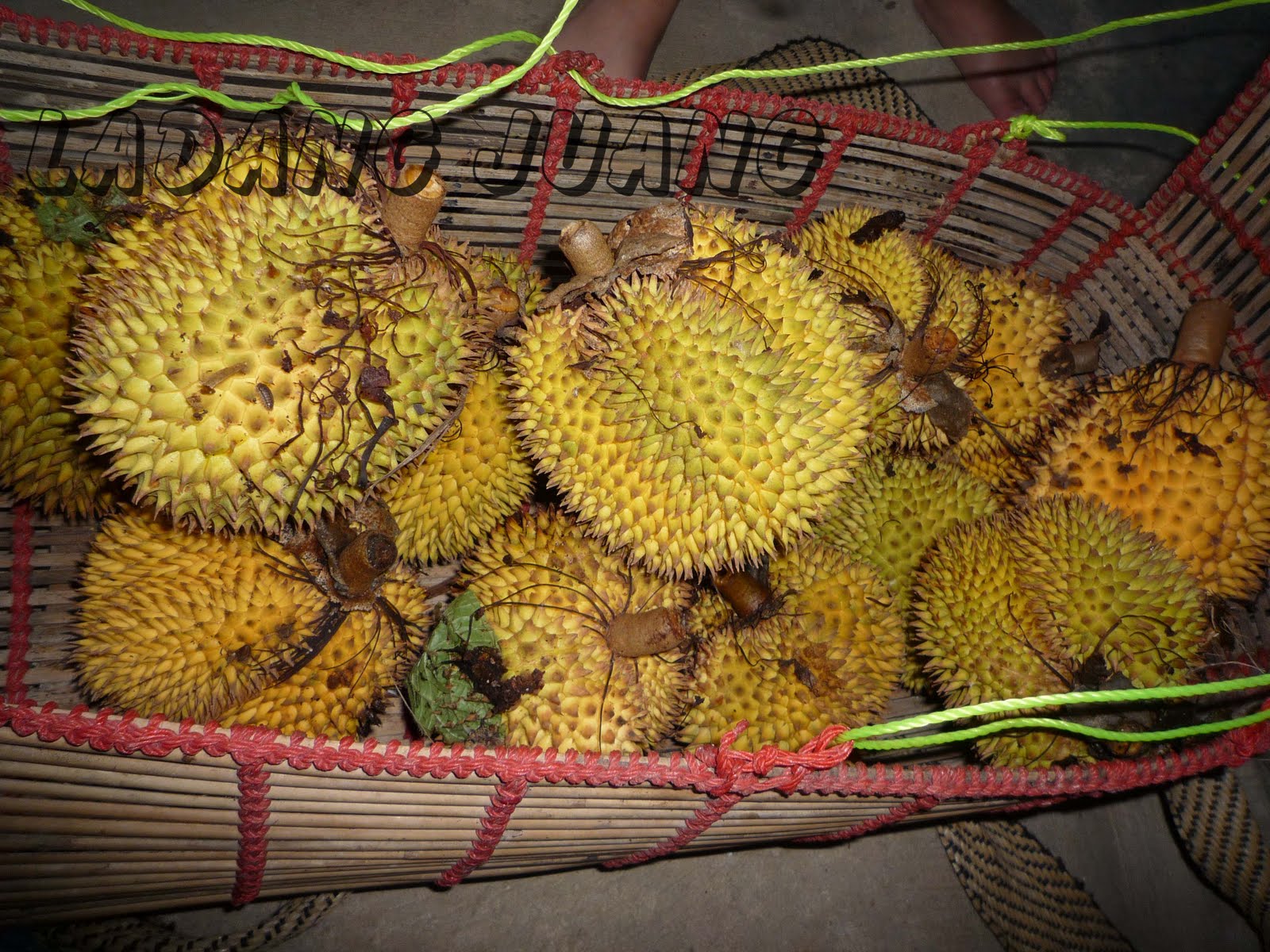
This year we had less durian, we only have Durian Monthong and also Durian Chanee. The other species like: Durian Otak Udang, Durian Kuning and Polo is not available. Because of the carelessness and lack of workers, this year, all the durian production is NOT FOR SELL. Because many of them are SPOILED and eaten by Squirel, in Malay local word here call 'Basing'.
When i opened the fresh, it is quite nice and sweet. I like the strong smells of it.. really good.
I managed to take few photos of the durian from our farm. Next year, we will be more careful and take care of the trees.
Below the durian which are spoiled by Squirrel or 'Tupai' in local term....
Labels:
Fruit
Durian Season- King of Fruits
End of December 2011 and New Year 2012, once again Brunei hit by the durian season. Durian is famous fruits in Borneo Island and South East Asia. In our farm, the last season is 2009, that was the time when I was in Kuala Lumpur for my training.
Habitats of Durian Fruit
Durian is a native plant of Brunei, Malaysia and Indonesia but some highlight that it is native to Philippines as well. Thailand is one of the main countries that export durian to the international market. Sri Lanka, Cambodia, Laos, Vietnam, Myanmar, West Indies, India, Hawaii, Polynesian Islands, Madagascar, China, Singapore, Northern Australia, and Malaysia as well as some parts of America are also well known as habitats for the durian tree.
Appearance of Durian
Nick named ‘King of Fruits’; durian is highly valued in Southeast Asian countries. Durian has a very distinguished smell and its skin is thorny and hard. The dimension of a durian fruit is about 30 – 15 cm and its weight is about three Kgs. Durian flowers bloom in a cluster and there are about three to thirty identical clusters borne on its trunk and large branches. Every flower has sepals and about five to six petals. Durian is round although the oblong shape is not irregular. The shells are green or brown while its flesh is a luminous yellowish or reddish color.
The odor of the edible parts of durian is so penetrating; it spreads a long distance even without removing the shell. Some like the aroma of durian very much while some others highly despise its scent. Durian trees yield two harvests per year, but it may vary in keeping with the various climates, cultivars and places. Durian trees bear fruit after 4 -5 years and they take about three months to ripe. From a great variety of durian, only the Durio ziebethinus variety is marketed internationally.
How to Eat Durian Fruit
The durian fruit is quite large. Its size is not a great problem as ripe ones fall in time. They may slightly crack when falling. By inserting a knife or a fair sized cleaver to such a crack, it can be opened very easily. Within, are about five parts and in each one of these, several seeds can be seen covered with an aril identical to custard. When durian is eaten immediately on falling, the pungent smell is bearable and the taste is also favorable. Durian fruit can be mixed with many flavors to increase its taste. Its seed can also be eaten after it’s cooked.
Labels:
Fruit
Monday, 5 December 2011
coconut oil
We had been selling coconut since last 2 years. From it, we do coconut oil from being wasted. This coconut oil is pure without MIXING with any oil... since i know outside the market, some people make short cut and they are mixing the coconut with other oil especially cooking oil.. so that it can profit more. This is the Market Technique but Not Good. The outcome of the oil will be less smell because it is not 100% Genuine anymore.
But i can guarantee that our products is 100% Genuine and it really took hours to cook and make it. In the morning, normally people sell it for BND 5 Per bottle. I look expensive to other but due to the process, i still think BND 5 is cheap because it really taking lots of time of making it.
http://www.youtube.com/watch?v=lA0VbtsVzA0
Before we move on to the benefits of coconut oil in detail, let us understand its composition.
Composition of Coconut Oil:
Coconut oil consists of more than ninety percent of saturated fats (Don’t panic! First read to the last word. Your opinion may change), with traces of few unsaturated fatty acids, such as monounsaturated fatty acids and polyunsaturated fatty acids. Virgin Coconut Oil is no different from this. Let us have a bit detailed study of this.
- The Saturated Fatty Acids: Most of them are Medium Chain Triglycerides, which are supposed to assimilate well. Lauric Acid is the chief contributor, with more than forty percent of the share, followed by Capric Acid, Caprylic Acid, Myristic Acid and Palmitic.
- The Polyunsaturated Fatty Acids: Linoleic Acid.
- The Monounsaturated Fatty Acids: Oleic Acid.
- The Poly-phenols: Gallic Acid, which is phenolic acid. These poly-phenols are supposed to be responsible for the fragrance and the taste of Coconut Oil and Virgin Coconut Oil is rich in these poly-phenols.
- Certain derivatives of fatty acid like Betaines, Ethanolamide, Ethoxylates, Fatty Esters, Fatty Polysorbates, Monoglycerides and Polyol Esters.
- Fatty Chlorides, Fatty Alcohol Sulphate and Fatty Alcohol Ether Sulphate, all of which are derivatives of Fatty Alcohols.
- Vitamin-E and Vitamin K and minerals such as Iron.
Coconut oil is one of the best natural nutrition for hair. It helps in healthy growth of hair providing them a shiny complexion. Regularmassage of the head with coconut oil ensures that your scalp is free of dandruff, lice, and lice eggs, even if your scalp is dry. Coconut oil is extensively used in the Indian sub-continent for hair care. It is an excellent conditioner and helps in the re-growth of damaged hair. It also provides the essential proteins required for nourishing damaged hair. It is therefore used as hair care oil and used in manufacturing various conditioners, and dandruff relief creams. Coconut oil is normally applied topically for hair care.
Coconut oil is excellent massage oil for the skin as well. It acts as an effective moisturizer on all types of skins including dry skin. The benefit of coconut oil on the skin is comparable to that of mineral oil. Further, unlike mineral oil, there is no chance of having any adverse side effects on the skin with the application of coconut oil. Coconut oil therefore is a safe solution for preventing dryness and flaking of skin. It also delays wrinkles, and sagging of skin which normally become prominent with age. Coconut oil also helps in treating various skin problems including psoriasis, dermatitis, eczemaand other skin infections. Therefore coconut oil forms the basic ingredient of various body careproducts such as soaps, lotions, creams, etc., used for skin care. Coconut oil also helps in preventing premature aging and degenerative diseases due to its antioxidant properties.
Heart Diseases:
There is a misconception spread among many people that coconut oil is not good for the heart. This is because it contains a large quantity of saturated fats. However, coconut oil is beneficial for the heart. It contains about 50% lauric acid, which helps in preventing various heart problems including high cholesterol levels and high blood pressure. The saturated fats present in coconut oil are not harmful as it happens in case of other vegetables oils. It does not lead to increase in LDL levels. It also reduces the incidence of injury in arteries and therefore helps in preventing atherosclerosis.Weight Loss
Digestion
Internal use of coconut oil occurs primarily as cooking oil. Coconut oil helps in improving the digestive system and thus prevents various stomach and digestion related problems including irritable bowel syndrome. The saturated fats present in coconut oil have anti microbial properties and help in dealing with various bacteria, fungi, parasites, etc., that cause indigestion. Coconut oil also helps in absorption of other nutrients such as vitamins, minerals and amino acids.Immunity:
Coconut oil is also good for the immune system. It strengthens the immune system as it contains antimicrobial lipids, lauric acid, capric acid and caprylic acid which have antifungal, antibacterial and antiviral properties. The human body converts lauric acid into monolaurin which is claimed to help in dealing with viruses and bacteria causing diseases such as herpes, influenza, cytomegalovirus, and even HIV. It helps in fighting harmful bacteria such as listeria monocytogenes and heliobacter pylori, and harmful protozoa such as giardia lamblia.Healing and Infections
When applied on infections, it forms a chemical layer which protects the infected body part from external dust, air, fungi, bacteria and virus. Coconut oil is most effective on bruises as it speeds up the healing process by repairing damaged tissues.Infections: Coconut oil is very effective against a variety of infections due to its antifungal, antiviral, and antibacterial properties. According to the Coconut Research Center, coconut oil kills viruses that cause influenza, measles, hepatitis, herpes, SARS, etc. It also kills bacteria that cause ulcers, throat infections, urinary tract infections, pneumonia, and gonorrhea, etc. Coconut oil is also effective on fungi and yeast that cause candidiasis, ringworm,athlete's foot, thrush, diaper rash, etc.
Other:
Liver: The presence of medium chain triglycerides and fatty acids helps in preventing liver diseases as they substances are easily converted into energy when they reach the liver, thus reducing work load on the liver and also preventing accumulation of fat.Kidney: Coconut oil helps in preventing kidney and gall bladder diseases. It also helps in dissolving kidney stones.
Pancreatitis: Coconut oil is also believed to be useful in treating pancreatitis.
Stress Relief: Coconut oil is very soothing and hence it helps in removing stress. Applying coconut oil to the head followed with a gentle massage helps in removing mental fatigue.
Diabetes: Coconut oil helps in controlling blood sugar, and improves the secretion of insulin. It also helps in effective utilization of blood glucose, thereby preventing and treating diabetes.
Bones: As mentioned earlier, coconut oil improves the ability of our body to absorb important minerals. These include calciumand magnesium which are necessary for development of bones. Thus coconut oil is very useful to women who are prone to osteoporosis after middle age.
Dental Care: Calcium is an important element present in teeth. Since coconut oil facilitates absorption of calcium by the body, it helps in getting strong teeth. Coconut oil also stops tooth decay.
HIV and Cancer: It is believed that coconut oil plays an instrumental role in reducing viral susceptibility of HIV and cancerpatients. Preliminary research has shown indications of the effect of coconut oil on reducing the viral load of HIV patients (Reference).
Finally, coconut oil is often preferred by athletes and body builders and by those who are dieting. The reason behind this being that coconut oil contains lesser calories than other oils, its fat content is easily converted into energy and it does not lead to accumulation of fat in the heart and arteries. Coconut oil helps in boosting energy and endurance, and enhances the performance of athletes.
This article is written by Kiran Patil
Visit the website of Coconut Research Center to get a list of the scientific literature on coconut oil
Taken from:
http://www.organicfacts.net/organic-oils/organic-coconut-oil/health-benefits-of-coconut-oil.html
Sunday, 6 November 2011
Papaya- Fruit of Angel
November.. there is no new products from the farm.. mainly because nowadays is rainy season.. no vegetables and fruits... but fortunate.. we managed to get Papaya... in Brunei local context called "Kepayas". As the reader knows.. fruits and vegetables have huge amount of vitamins and Enzymes and mineral in it which God had make for the human being BUT many people may not know that their benefit in our human health in detail.. Here we go to explore more on it...
Description
Papayas are fruits that remind us of the tropics, the regions of the world in which they are grown. Once considered an exotic fruit, papayas' rise in popularity has made them much more available. Papayas are spherical or pear-shaped fruits that can be as long as 20 inches. The ones commonly found in the market usually average about 7 inches and weigh about one pound. Their flesh is a rich orange color with either yellow or pink hues.
Papaya has a wonderfully soft, butter-like consistency and a deliciously sweet, musky taste. Inside the inner cavity of the fruit are black, round seeds encased in a gelatinous-like substance. Papaya's seeds are edible, although their peppery flavor is somewhat bitter.
The fruit, as well as the other parts of the papaya tree, contain papain, an enzyme that helps digest proteins. This enzyme is especially concentrated in the fruit when it is unripe. Papain is extracted to make digestive enzyme dietary supplements and is also used as an ingredient in some chewing gums.
This chart graphically details the %DV that a serving of Papaya provides for each of the nutrients of which it is a good, very good, or excellent source according to our Food Rating System. Additional information about the amount of these nutrients provided by Papaya can be found in the Food Rating System Chart. A link that takes you to the In-Depth Nutritional Profile for Papaya, featuring information over 80 nutrients, can be found under the Food Rating System Chart.
Protection Against Heart Disease
Papayas may be very helpful for the prevention of atherosclerosis and diabetic heart disease. Papayas are an excellent source of vitamin C as well as a good source of vitamin E and vitamin A (through their concentration of pro-vitamin A carotenoid phytonutrients), three very powerful antioxidants. These nutrients help prevent the oxidation of cholesterol. Only when cholesterol becomes oxidized is it able to stick to and build up in blood vessel walls, forming dangerous plaques that can eventually cause heart attacks or strokes. One way in which dietary vitamin E and vitamin C may exert this effect is through their suggested association with a compound called paraoxonase, an enzyme that inhibits LDL cholesterol and HDL cholesterol oxidation.
Papayas are also a good source of fiber, which has been shown to lower high cholesterol levels. The folic acid found in papayas is needed for the conversion of a substance called homocysteine into benign amino acids such as cysteine or methionine. If unconverted, homocysteine can directly damage blood vessel walls and, if levels get too high, is considered a significant risk factor for a heart attack or stroke.
Promotes Digestive Health
The nutrients in papaya have also been shown to be helpful in the prevention of colon cancer. Papaya's fiber is able to bind to cancer-causing toxins in the colon and keep them away from the healthy colon cells. In addition, papaya's folate, vitamin C, beta-carotene, and vitamin E have each been associated with a reduced risk of colon cancer. These nutrients provide synergistic protection for colon cells from free radical damage to their DNA. Increasing your intake of these nutrients by enjoying papaya is an especially good idea for individuals at risk of colon cancer.
Anti-Inflammatory Effects
Papaya contains several unique protein-digesting enzymes including papain and chymopapain. These enzymes have been shown to help lower inflammation and to improve healing from burns. In addition, the antioxidant nutrients found in papaya, including vitamin C, vitamin E, and beta-carotene, are also very good at reducing inflammation. This may explain why people with diseases that are worsened by inflammation, such as asthma, osteoarthritis, and rheumatoid arthritis, find that the severity of their condition is reduced when they get more of these nutrients. Immune Support
Vitamin C and vitamin A, which is made in the body from the beta-carotene in papaya, are both needed for the proper function of a healthy immune system. Papaya may therefore be a healthy fruit choice for preventing such illnesses as recurrent ear infections, colds and flu. Protection against Macular Degeneration
Your mother may have told you carrots would keep your eyes bright as a child, but as an adult, it looks like fruit is even more important for keeping your sight. Data reported in a study published in the Archives of Ophthalmology indicates that eating 3 or more servings of fruit per day may lower your risk of age-related macular degeneration (ARMD), the primary cause of vision loss in older adults, by 36%, compared to persons who consume less than 1.5 servings of fruit daily. In this study, which involved over 110,000 women and men, researchers evaluated the effect of study participants' consumption of fruits; vegetables; the antioxidant vitamins A, C, and E; and carotenoids on the development of early ARMD or neovascular ARMD, a more severe form of the illness associated with vision loss. While, surprisingly, intakes of vegetables, antioxidant vitamins and carotenoids were not strongly related to incidence of either form of ARMD, fruit intake was definitely protective against the severe form of this vision-destroying disease. Three servings of fruit may sound like a lot to eat each day, but papaya can help you reach this goal. Add slices of fresh papaya to your morning cereal, lunch time yogurt or green salads. Cut a papaya in half and fill with cottage cheese, crab, shrimp or tuna salad. For an elegant meal, place slices of fresh papaya over any broiled fish.Protection against Rheumatoid Arthritis
While one study suggests that high doses of supplemental vitamin C makes osteoarthritis, a type of degenerative arthritis that occurs with aging, worse in laboratory animals, another indicates that vitamin C-rich foods, such as papaya, provide humans with protection against inflammatory polyarthritis, a form of rheumatoid arthritis involving two or more joints. The findings, presented in the Annals of the Rheumatic Diseases were drawn from a study of more than 20,000 subjects and focused on subjects who developed inflammatory polyarthritis and similar subjects who remained arthritis-free during the follow-up period. Subjects who consumed the lowest amounts of vitamin C-rich foods were more than three times more likely to develop arthritis than those who consumed the highest amounts.
Promote Lung Health
If you or someone you love is a smoker, or if you are frequently exposed to secondhand smoke, then making vitamin A-rich foods, such as papaya, part of your healthy way of eating may save your life, suggests research conducted at Kansas State University. While studying the relationship between vitamin A, lung inflammation, and emphysema, Richard Baybutt, associate professor of nutrition at Kansas State, made a surprising discovery: a common carcinogen in cigarette smoke, benzo(a)pyrene, induces vitamin A deficiency.
Baybutt's earlier research had shown that laboratory animals fed a vitamin A-deficient diet developed emphysema. His latest animal studies indicate that not only does the benzo(a)pyrene in cigarette smoke cause vitamin A deficiency, but that a diet rich in vitamin A can help counter this effect, thus greatly reducing emphysema.
Baybutt believes vitamin A's protective effects may help explain why some smokers do not develop emphysema. "There are a lot of people who live to be 90 years old and are smokers," he said. "Why? Probably because of their diet. The implications are that those who start smoking at an early age are more likely to become vitamin A deficient and develop complications associated with cancer and emphysema. And if they have a poor diet, forget it." If you or someone you love smokes, or if your work necessitates exposure to second hand smoke, protect yourself by making sure that at least one of the World's Healthiest Foods that are rich in vitamin A, such as papaya, is a daily part of your healthy way of eating.
Papaya and Green Tea Team Up to Prevent Prostate Cancer
Choosing to regularly eat lycopene-rich fruits, such as papaya, and drink green tea may greatly reduce a man's risk of developing prostate cancer, suggests research published the Asia Pacific Journal of Clinical Nutrition (Jian L, Lee AH, et al.) In this case-control study involving 130 prostate cancer patients and 274 hospital controls, men drinking the most green tea were found to have an 86% reduced risk of prostate cancer compared, to those drinking the least.
A similar inverse association was found between the men's consumption of lycopene-rich fruits and vegetables such as tomatoes, apricots, pink grapefruit, watermelon, papaya, and guava. Men who most frequently enjoyed these foods were 82% less likely to have prostate cancer compared to those consuming the least lycopene-rich foods.
Regular consumption of both green tea and foods rich in lycopene resulted in a synergistic protective effect, stronger than the protection afforded by either, the researchers also noted.
Practical Tips: Get in the habit of drinking green tea and eating lycopene-rich foods.
- Take a quart of iced green tea to work and sip throughout the day or take it to the gym to provide prostate protection while replenishing fluids after your workout.
- Pack a ziploc bag of apricots and almonds in your briefcase or gym bag for a handy snack.
- Start your breakfast with a half grapefruit or a glass of papaya or guava juice.
- Add papaya to any smoothie or fruit salad or use as a delectable garnish for fish.
- For a delicious summer lunch, cut a papaya in half, scoop out the seeds, sprinkle with lime juice and top with cottage cheese, a fresh mint leaf, and roasted almonds.
- Begin lunch or dinner with some spicy tomato juice on the rocks with a twist of lime. Snack on tomato crostini: in the oven, toast whole wheat bread till crusty, then top with tomato sauce, herbs, a little grated cheese, and reheat until the cheese melts.
- Top whole wheat pasta with olive oil, pine nuts, feta cheese and a rich tomato sauce for lunch or dinner.
Taken From:
http://www.whfoods.com/genpage.php?tname=foodspice&dbid=47
Labels:
Fruit
Saturday, 9 April 2011
Jackfruit
Normally we sell the jackfruit in kilo and it only cost 80sen per Kilo. But this time, we do bit of changes. We sold it in packet. 1 packet for BND $1 and it weight around 500 to 600 grams. It do earn a lots than 1 whole piece of Jackfruit. But doing this consume time and energy. Sometimes, my family and worker wake up at 4 am just to cut and packing this Jackfruit to make sure it sell in the market with fresh, good and clean condition. So far, it usually sell out so quickly... Yes! We can do it... and keep producing good and healthy products to the customer...
I, myself love to eat Jackfruit cook in coconut gravy and like to share this simple recipe to the reader. May be within this blog, this is the first time I published cook recipe together with the new products... To those out there, wanna try this recipe out and share your experiences with me...
Video taken from:
http://www.youtube.com/watch?v=uAsKRgA-vq8
I, myself love to eat Jackfruit cook in coconut gravy and like to share this simple recipe to the reader. May be within this blog, this is the first time I published cook recipe together with the new products... To those out there, wanna try this recipe out and share your experiences with me...
Video taken from:
http://www.youtube.com/watch?v=uAsKRgA-vq8
Labels:
Fruit
Wednesday, 9 February 2011
Year 2011 New project in My House- COCONUT
Due to some reasons, I am so busy until unable to update my blog. This year, there are bit changes in the routine. Sometimes, every morning, workers are busy doing their job.. They wake up at 4:30 am or 5 am in the morning and open the coconut to bring to the market to sell at 7.00 am. Pity them but this is life... Earn and produce money to the farm... Oh ya.. forget to inform that all the coconut is not product from our farm... it is imported from the neighbor country...From the market again... it will be process again to become Fresh Shredded Coconut... to sell to the public with different prices... depending on the type and how much they want.
This is the photos of some workers and relatives helping to open the coconut..
Labels:
Fruit
Sunday, 12 December 2010
Durian Belanda
Kali ini, saya akan memaparkan buah yang ajaib ini di dalam blog saya. Selama ini, saya langsung tidak endah ataupun peduli khasiat ini sehingga di terjual di pasaran. Pelanggan di Pasar sering mencari Buah ini dan kata mereka adalah Ubat Kanker... Setelah saya tahu khasiat nya, kebanyakan buah ini tidak lagi di jual secara Komersial kerana saya sendiri yang akan makan. Heheheehe.. Tetapi jika pokok nya berbuah banyak, kami juga akan menjual di pasar.
Mari kita selidiki lebih banyak tentang Buah ini...
Durian Belanda atau Soursop, buah dari pohon Graviola adalah pembunuh semulajadi sel kanser yang ajaib dengan 10 ribu kali lebih kuat dari pada terapi kemo. Tapi kenapa kita tidak tahu?
Labels:
Fruit
Saturday, 10 July 2010
Langsat " Lansium domesticum"
DISTRIBUTION
Lansium duranum was originally native to the Malaysian peninsula and known locally as Langsat.
Agriculturally, the tree is grown throughout the entire Southeast asian region, ranging from Southern India to the Philippines for its fruit. In the Philippines, where it is locally referred to as the lanzones or langsa, the plant is grown mostly on the southern parts of the island of Luzon, especially in Paete, Laguna, due to the species' narrow range of conditions favorable to its survival. It is also found in abundance on Northern Mindanao particularly in places as Butuan, Cagayan de Oro, and Camiguin. The Camiguin variety is especially sweet and succulent.
In Indonesia, Langsat is very popular fruit in West Kalimantan (Pontianak, Indonesia) and South Sumatra (also called 'Duku'). In Sarawak, northern Borneo, the name Duku is reserved for the larger-sized varieties of Langsat, near the size of golf balls, claimed sweeter and with less sap in the peel. A variety called Dokong exported to mainland Malaysia from Thailand grows tighter in the clusters, giving it a faceted shape, and is preferred by many over the standard Langsat.
Within mainland Asia, the tree is cultivated in Thailand (Thai: ลางสาด, langsat), Cambodia, Vietnam and India, as well as its native Malaysia. Outside the region, it has also been successfully transplanted and introduced to Hawaii and Surinam. It grows well in the wetter areas (120 inches/3 meters or more annual rainfall) of Costa Rica, where it is still very rare, having been introduced decades ago by the United Fruit Company. A major hindrance to its acceptance seems to be that it is very slow in bearing, said to take 12 years from seed. However, air layering from mature trees, as well as grafting, are said to work well and produce much faster.
Fruit
Fruits are ovoid, roundish orbs around five centimeters in diameter, usually found in clusters of two to thirty fruits along the branches and trunk. Each round fruit is covered by yellowish, thick, leathery skin. Underneath the skin, the fruit is divided into five or six slices of translucent, juicy flesh. The flesh is slightly acidic in taste, although ripe specimens are sweeter. Green seeds are present in around half of the segments, usually taking up a small portion of the segment although some seeds take up the entire segment's volume. In contrast with the sweet-sour flavor of the fruit's flesh, the seeds are extremely bitter. The fruit taste has been compared to a combination grape and "perfect" grapefruit with no bitterness. Yet the seeds if bitten have the bitterness of a grapefruit yet stronger. The sweet juicy flesh contains sucrose, fructose, and glucose.
http://en.wikipedia.org/wiki/Lansium_domesticum
Lansium duranum was originally native to the Malaysian peninsula and known locally as Langsat.
Agriculturally, the tree is grown throughout the entire Southeast asian region, ranging from Southern India to the Philippines for its fruit. In the Philippines, where it is locally referred to as the lanzones or langsa, the plant is grown mostly on the southern parts of the island of Luzon, especially in Paete, Laguna, due to the species' narrow range of conditions favorable to its survival. It is also found in abundance on Northern Mindanao particularly in places as Butuan, Cagayan de Oro, and Camiguin. The Camiguin variety is especially sweet and succulent.
In Indonesia, Langsat is very popular fruit in West Kalimantan (Pontianak, Indonesia) and South Sumatra (also called 'Duku'). In Sarawak, northern Borneo, the name Duku is reserved for the larger-sized varieties of Langsat, near the size of golf balls, claimed sweeter and with less sap in the peel. A variety called Dokong exported to mainland Malaysia from Thailand grows tighter in the clusters, giving it a faceted shape, and is preferred by many over the standard Langsat.Within mainland Asia, the tree is cultivated in Thailand (Thai: ลางสาด, langsat), Cambodia, Vietnam and India, as well as its native Malaysia. Outside the region, it has also been successfully transplanted and introduced to Hawaii and Surinam. It grows well in the wetter areas (120 inches/3 meters or more annual rainfall) of Costa Rica, where it is still very rare, having been introduced decades ago by the United Fruit Company. A major hindrance to its acceptance seems to be that it is very slow in bearing, said to take 12 years from seed. However, air layering from mature trees, as well as grafting, are said to work well and produce much faster.
Fruit
Fruits are ovoid, roundish orbs around five centimeters in diameter, usually found in clusters of two to thirty fruits along the branches and trunk. Each round fruit is covered by yellowish, thick, leathery skin. Underneath the skin, the fruit is divided into five or six slices of translucent, juicy flesh. The flesh is slightly acidic in taste, although ripe specimens are sweeter. Green seeds are present in around half of the segments, usually taking up a small portion of the segment although some seeds take up the entire segment's volume. In contrast with the sweet-sour flavor of the fruit's flesh, the seeds are extremely bitter. The fruit taste has been compared to a combination grape and "perfect" grapefruit with no bitterness. Yet the seeds if bitten have the bitterness of a grapefruit yet stronger. The sweet juicy flesh contains sucrose, fructose, and glucose.http://en.wikipedia.org/wiki/Lansium_domesticum
Labels:
Fruit
Saturday, 8 May 2010
Ceramai
I am surfing throughout the net looking for this fruit name. In Brunei, it is called "CIREMAI" .. Don't deceive by its outlook... looks delirious like grapes. But this fruit is sour. I had been surfing throughout the net, it had so many names...
In Indonesia: it is known as:
Careme, cerme (Sunda), cerme (Jawa). careme (Madura); Ceremoi (Aceh), cerme, ceramai, camin-camin (Sumatera).; Carmen, cermen (Bali), sarume (Bima). lumpias aoyok, tili; Lombituko bolaano, caramele, carameng (Sulawesi),; Ceremin (Ternate), selemele, selumelek (Roti).; Salmele, cermele (Timor).
http://www.herbal-obatalami.com/cerme.html
Labels:
Fruit
Friday, 23 April 2010
Benefit of Dragon fruit
To all the internet viewer and followers, I apologised for not updating my blog for a long time. Now, I am returned... When I back from Singapore, I am happy to see my uncle dragon fruits bear lots of fruits..
Varieties:
Hylocereus it has red skin and white flesh.
Hylocereus polyrhizus it has red skin and red flesh.
Selinecereus megalanthus it has yellow skin and white flesh.
Yellow skin dragon fruit is not available in our farm...
http://hubpages.com/hub/Health-Benefits-of-Dragon-Fruit
Varieties:
Hylocereus it has red skin and white flesh.
Hylocereus polyrhizus it has red skin and red flesh.
Selinecereus megalanthus it has yellow skin and white flesh.
Yellow skin dragon fruit is not available in our farm...
http://hubpages.com/hub/Health-Benefits-of-Dragon-Fruit
Health Benefits:
**Dragon fruit help to lower blood glucose levels in type 2 **diabetes. Dragon fruit prevent formation of cancer causing free **radicals.
**Dragon fruit helps moisturize and smoothen skin and decrease bad **cholesterol level.
**Dragon fruit helps improve appetite.
**Dragon fruit can enhance the body metabolism because of its
protein content.
**Dragon fruit helps improve digestion and reduce fat.
**Dragon fruit helps maintain the health of the eyes.
**Dragon fruit helps strengthen the bones and teeth.
**Dragon fruit helps in tissue development.
**Dragon fruit promotes healing of cuts and bruise.
**Dragon fruit helps improve memory.
REF: http://hubpages.com/hub/Health-Benefits-of-Dragon-Fruit
Labels:
Fruit
Sunday, 22 November 2009
Monday, 16 November 2009
Pokok Durian
When I was in Kuala Lumpur from Early August till the end of the October, I did not have chance to take picture but very lucky, my brother took few photos from his camera and I managed to upload it now. I hope during the durian season, i was in Brunei...
Labels:
Fruit
Subscribe to:
Posts (Atom)